







Quick Highlights
- Mild belly button pain is common as the uterus grows and the skin and abdominal wall stretch.
- Pressure, sensitive skin, an irritated piercing, abdominal muscle separation, or an umbilical hernia may cause discomfort around the navel.
- Loose clothing, gentle skin care, position changes, and abdominal support may provide relief.
- A new bulge near the belly button should be checked, especially if it becomes painful, firm, discolored, or is accompanied by nausea or vomiting.
- Seek prompt medical advice for severe or persistent pain, bleeding, fever, fluid leakage, regular contractions, vomiting, or reduced fetal movement.
A sore belly button during pregnancy can feel surprisingly sharp. You may notice tenderness when your clothing touches it, discomfort when you move, or a pulling sensation as your belly grows.
In many cases, this happens because the expanding uterus stretches the skin, muscles, and connective tissue around the abdomen. However, not every pain near the belly button should be dismissed as a normal pregnancy symptom.
The location, severity, duration, and accompanying symptoms matter. Mild surface tenderness is different from severe abdominal pain or a painful lump.
Here is how to recognize common causes, ease minor discomfort, and know when to call your doctor or midwife.
Is Belly Button Pain Normal During Pregnancy?
Mild belly button pain can occur during pregnancy, particularly as the abdomen expands during the second and third trimesters.
You may experience:
- Tenderness around or inside the belly button
- A stretching or pulling feeling
- Mild soreness when changing positions
- Itchy or sensitive skin
- Discomfort when clothing rubs against the area
- A belly button that becomes flatter or begins to stick out
ACOG notes that the navel may begin to stick out as the abdomen changes during pregnancy. Rapid skin stretching can also cause itching and stretch marks.
Mild discomfort that comes and goes and improves with rest or a position change is often less concerning. Still, contact your maternity care provider if the pain is new, persistent, worsening, or difficult to explain.
When Does Belly Button Pain Usually Start?
Belly button discomfort can happen at any stage, but it is more commonly noticed as the uterus grows beyond the pelvis and the abdomen becomes larger.
This often occurs during the:
- Second trimester
- Third trimester
- Final weeks of pregnancy, when the abdominal wall is under greater pressure
Some women never experience it. Others notice only skin sensitivity, while some feel a deeper pulling sensation.
There is no exact week when belly button pain must begin or end. Symptoms also do not always disappear at a fixed point after delivery. Recovery depends on the cause, how much the abdominal wall stretched, whether a hernia is present, and how the body heals after birth.
What Does Belly Button Pain During Pregnancy Feel Like?
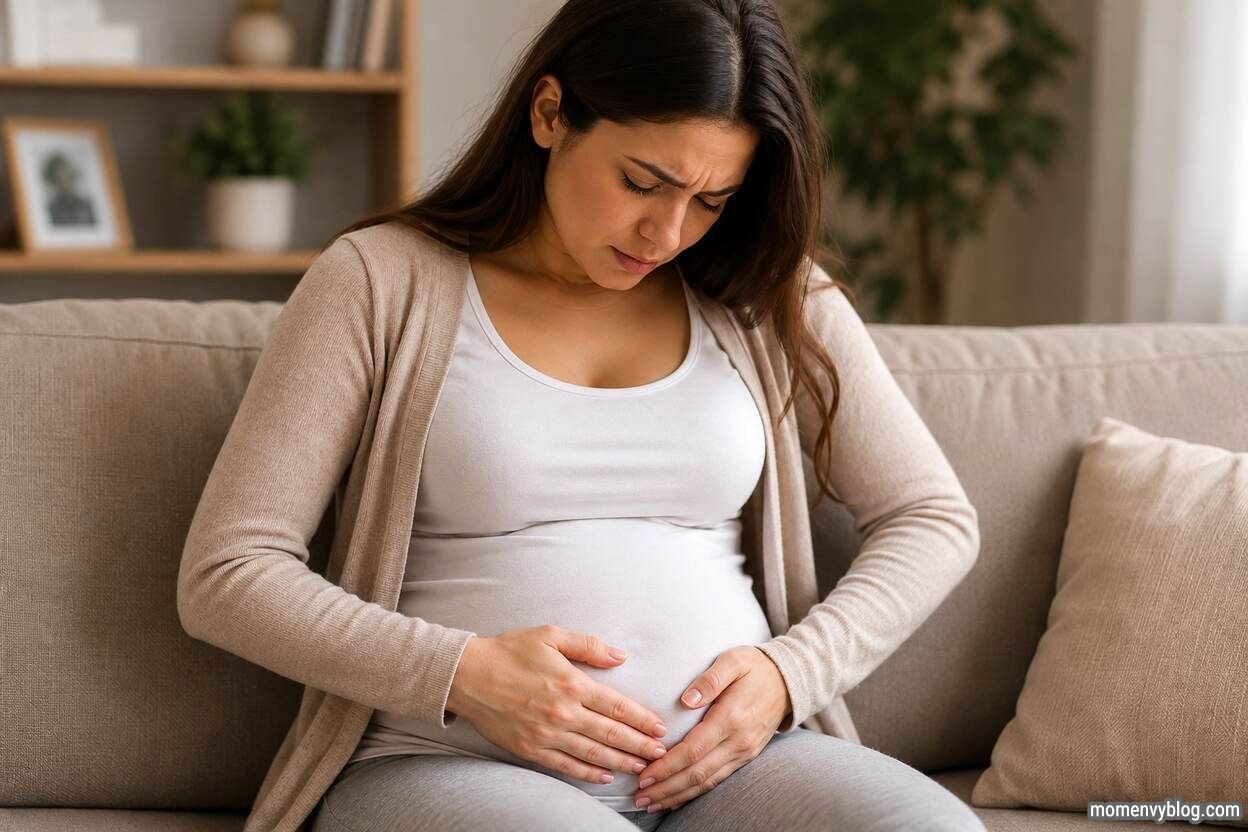
The sensation can vary depending on its cause.
It may feel like:
- A dull ache
- Tenderness to touch
- A pulling sensation
- Mild burning or stinging
- Itching
- Pressure from inside the abdomen
- Sharp pain during certain movements
- Soreness around a piercing
- Pain associated with a visible bulge
Pain that feels as though it is on the skin is more likely to come from stretching, dryness, or irritation. Deeper pain or pain associated with a lump needs more careful assessment.
Common Causes of Belly Button Pain During Pregnancy
1. Stretching Skin and Connective Tissue
As your baby and uterus grow, the skin and connective tissue across your abdomen must expand.
This stretching may make the skin around the belly button feel:
- Tight
- Sore
- Itchy
- Sensitive
- Irritated by clothing
Stretch marks may also develop around the abdomen. These can itch or feel tender when they first appear.
The skin may be especially uncomfortable if it becomes dry or rubs against tight waistbands.
2. Pressure From the Growing Uterus
The growing uterus places increasing pressure on the inside of the abdominal wall.
The belly button is located near the center of this changing area, so you may feel pressure, pulling, or tenderness around it as pregnancy progresses.
This discomfort may become more noticeable when you:
- Stand for a long time
- Cough or sneeze
- Laugh
- Bend forward
- Roll over in bed
- Get up from a chair
- Exercise
- Carry something heavy
Pressure alone should not cause intense or steadily worsening pain.
3. A Belly Button That Is Becoming Flat or Sticking Out
An “innie” belly button may become flatter or turn outward as the abdomen expands.
This change is usually harmless, but the newly exposed skin may be more sensitive because it is not used to rubbing against clothing.
A protruding belly button is not necessarily a hernia. However, a distinct lump beside or beneath the navel, especially one that becomes more noticeable when coughing or straining, should be examined.
4. Dry or Irritated Skin
Pregnancy skin can become dry, itchy, or sensitive.
Products that were comfortable before pregnancy may begin to irritate your skin, including:
- Strongly scented body lotions
- Perfumed shower gels
- Harsh soaps
- Essential oils
- Adhesives
- Tight synthetic clothing
Sweat can also collect inside a deep belly button and irritate the area.
Redness, discharge, odor, warmth, crusting, or worsening tenderness may indicate an infection rather than simple dryness.
5. An Irritated Belly Button Piercing
A belly button piercing may become uncomfortable as the skin stretches.
Possible problems include:
- Pulling around the piercing hole
- Redness
- Swelling
- Tenderness
- Skin thinning
- The jewelry catching on clothing
- Infection
- Migration of the piercing toward the skin surface
You do not automatically have to remove a fully healed piercing at the start of pregnancy. However, removal may be sensible if the jewelry feels tight, pulls on the skin, or causes repeated irritation.
Do not force jewelry through swollen or infected skin. Contact a healthcare professional if you notice pus, spreading redness, warmth, fever, or significant pain.
Avoid getting a new belly button piercing during pregnancy because healing may be more difficult and infection would create an unnecessary risk.
6. Umbilical Hernia
An umbilical hernia occurs when tissue pushes through a weak area in the abdominal wall near the belly button.
It may appear as a soft lump or bulge that becomes more noticeable when you:
- Cough
- Laugh
- Stand
- Strain
- Lift something
In adults, an umbilical hernia can sometimes cause discomfort when coughing or straining.
Pregnancy may reveal or worsen an existing weak area because the abdominal wall is under greater pressure.
Possible signs of an umbilical hernia
- A new bulge in or beside the belly button
- Discomfort around the lump
- Pain when coughing or lifting
- A bulge that changes size with position
- Pressure around the navel
Do not try to diagnose a hernia by pressing hard on the lump. Ask your doctor or midwife to examine it.
When a hernia may be an emergency
Seek urgent medical care if a belly button bulge:
- Becomes suddenly or severely painful
- Feels firm or cannot be gently reduced
- Turns red, purple, blue, or dark
- Is accompanied by nausea or vomiting
- Occurs with fever or abdominal swelling
- Is associated with an inability to pass gas or stool
These symptoms can mean that tissue has become trapped or its blood supply has been affected.
7. Diastasis Recti
Diastasis recti is a widening between the two sides of the rectus abdominis muscles.
These muscles run vertically down the front of the abdomen. As the uterus grows, the connective tissue between them stretches to create more room.
You may notice:
- A ridge or doming along the middle of your abdomen
- Weakness through the center of the abdominal wall
- A bulge when sitting up
- Lower-back discomfort
- A feeling of reduced core support
- Tenderness near the belly button
Diastasis recti is not the same as a hernia, although both conditions can occur together. MedlinePlus notes that abdominal wall stretching and an umbilical hernia can be associated with diastasis recti.
A pelvic-health physiotherapist can assess your abdominal wall and recommend safe ways to move, exercise, and recover.
8. Muscle Strain
Abdominal muscles may become sore after:
- Lifting
- Repeated coughing
- A sudden twisting movement
- Exercise
- Getting out of bed awkwardly
- Carrying an older child
- Performing a movement your changing body is not used to
Muscle-related pain may become more noticeable during movement and improve with rest.
Speak to your maternity care provider if the pain is strong, does not improve, or occurs with other pregnancy symptoms.
9. Pressure From Clothing
Tight waistbands, stiff maternity panels, buttons, and seams may press directly against a tender or protruding belly button.
Even clothing that fit comfortably a few weeks earlier can become irritating as your belly grows.
This cause is easy to overlook. Notice whether the discomfort appears after wearing a particular pair of pants, support garment, or waistband.
Could Belly Button Pain Be Caused by the Baby?
Your baby is not directly pulling on your belly button.
The baby’s umbilical cord connects the baby to the placenta inside the uterus. It is not attached to your own navel.
However, fetal growth, movements, and changes in position can increase pressure against different parts of the abdominal wall. This may make an already sensitive area around your belly button feel more noticeable.
A strong movement near the navel can be uncomfortable, but severe or persistent pain should not automatically be blamed on the baby’s position.
How to Relieve Mild Belly Button Pain During Pregnancy
These measures may help when the discomfort is mild and your maternity care provider has not identified a medical problem.
1. Change Positions
A position that places less pressure on your abdomen may provide relief.
Try:
- Lying on your side
- Sitting with your back supported
- Avoiding long periods of standing
- Rolling onto your side before getting out of bed
- Rising slowly from chairs
- Taking short movement breaks
Use your arms to help push yourself upright instead of performing a straight sit-up.
2. Support Your Belly With a Pillow
When sleeping on your side, place a small pillow or pregnancy pillow beneath your belly.
This can reduce the pulling sensation caused by the weight of the abdomen.
A pillow between your knees may also make side sleeping more comfortable.
3. Wear Loose, Soft Clothing
Choose clothing that does not rub or press on the belly button.
Helpful options include:
- Soft maternity dresses
- Stretchy waistbands worn below or above the tender area
- Seamless maternity leggings
- Loose cotton tops
- Breathable fabrics
Covering a protruding belly button with a soft layer of clothing may protect it from friction. Avoid strong adhesives directly on sensitive skin.
4. Use a Gentle Moisturizer
A fragrance-free moisturizer may soothe dry, tight, or itchy skin.
Apply it gently rather than rubbing firmly over a painful area.
Cocoa butter is not required, and no moisturizer has been proven to prevent all stretch marks. Choose a simple product that does not irritate your skin.
Stop using it if you develop:
- Burning
- A rash
- Increased redness
- Swelling
- Worsening itching
Severe itching, especially on the palms or soles or without a visible rash, should be reported to your maternity care provider.
5. Try a Cool or Warm Compress
A cool compress can soothe itchy or irritated skin.
A comfortably warm compress may relax sore muscles. It should not be hot enough to burn the skin or raise your body temperature.
Apply it for a short period and stop if the discomfort worsens.
Do not use strong heat directly over a painful lump or unexplained abdominal pain.
6. Consider a Pregnancy Support Belt
A maternity support belt may reduce the feeling of abdominal heaviness for some women.
It should:
- Feel supportive rather than restrictive
- Allow you to breathe comfortably
- Sit correctly around the hips and lower abdomen
- Not increase pelvic pressure
- Not be worn painfully tight
A belt does not treat a hernia or repair separated abdominal muscles. Ask your doctor, midwife, or physiotherapist whether one is appropriate, especially if you have pelvic pain or a visible bulge.
7. Modify Lifting and Movement
To reduce strain through the abdominal wall:
- Stand close to the object.
- Keep your feet stable.
- Bend your knees.
- Keep the load close to your body.
- Breathe out as you lift.
- Turn with your feet instead of twisting.
- Ask for help with heavy or awkward objects.
When getting out of bed, roll onto your side, lower your legs, and push up with your arms.
This method may reduce pulling through the center of your abdomen.
8. Keep the Belly Button Clean and Dry
Wash gently with water and a mild cleanser.
After bathing:
- Rinse away soap.
- Pat the area dry.
- Avoid digging deeply with cotton swabs or sharp objects.
- Do not apply strong antiseptics unless advised.
- Keep piercing jewelry clean according to professional guidance.
Contact a healthcare professional if you notice discharge, odor, warmth, increasing redness, or swelling.
Can You Prevent Belly Button Pain During Pregnancy?
It may not be possible to prevent all discomfort because abdominal growth and tissue stretching are natural parts of pregnancy.
You may reduce irritation by:
- Moisturizing dry skin
- Wearing loose clothing
- Changing uncomfortable positions
- Avoiding sudden heavy lifting
- Using good movement techniques
- Treating coughing or constipation appropriately
- Addressing piercing irritation early
- Asking about abdominal support
- Working with a pelvic-health physiotherapist when needed
Do not blame yourself if your belly button becomes sore. Body size, fitness, or preparation cannot prevent every pregnancy symptom.
Should You Remove a Belly Button Piercing During Pregnancy?
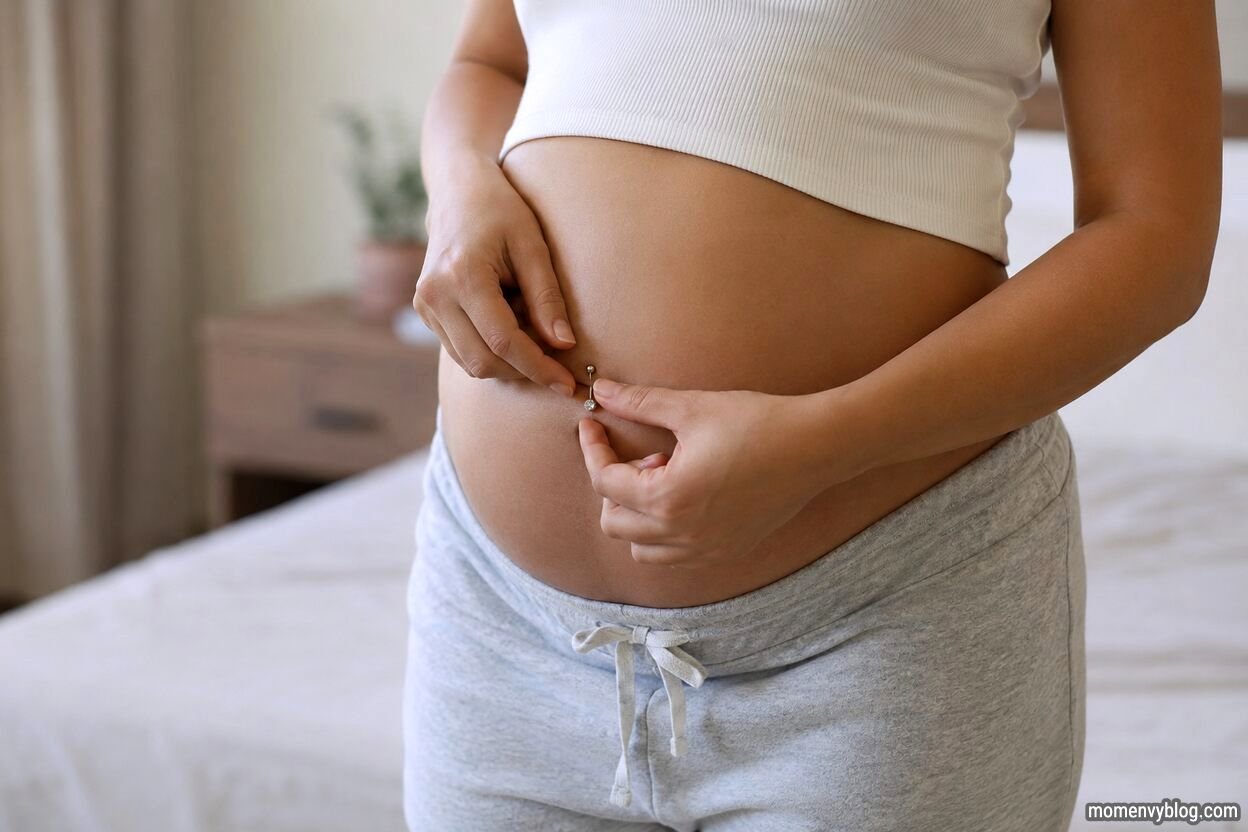
Removal depends on how the piercing and surrounding skin are responding.
Consider removing it if:
- The jewelry feels tight
- The skin appears thin
- It repeatedly catches on clothing
- The hole is stretching
- The area is sore or swollen
- Your maternity care provider advises removal
- You need a medical procedure requiring it to be removed
A flexible pregnancy bar is sometimes marketed as an alternative, but it can still irritate the skin. Discuss ongoing discomfort with a professional rather than assuming a different piece of jewelry will solve the problem.
If you decide to remove the jewelry, wash your hands first and keep the area clean. Do not remove it by force if the skin is very swollen or appears infected.
When Should You Call Your Doctor or Midwife?
Contact your maternity care provider if belly button pain:
- Is moderate or severe
- Continues despite rest
- Keeps returning
- Is becoming worse
- Is painful to touch
- Is associated with a new lump
- Interferes with walking, sleeping, or daily activities
- Occurs after a fall or abdominal injury
- Is accompanied by a rash, discharge, or spreading redness
A clinician may examine your abdominal wall and check for a hernia, infection, muscle strain, skin condition, contractions, or another cause of abdominal pain.
Warning Signs That Need Prompt Medical Care
Belly button pain should be assessed promptly when it occurs with:
- Vaginal bleeding
- Fluid leaking from the vagina
- Regular or painful contractions
- Fever or chills
- Persistent nausea or vomiting
- Severe abdominal tenderness
- A rigid or very swollen abdomen
- Dizziness or fainting
- Pain when urinating
- Severe headache or vision changes
- Sudden swelling
- Reduced fetal movement once you normally feel a pattern
- A painful or discolored bulge near the belly button
Abdominal pain in pregnancy has many possible causes. Some are minor, while others require urgent care. Do not wait for severe symptoms to become unbearable before asking for advice.
Will Belly Button Pain Go Away After Delivery?
Pain caused by stretching and pressure often improves after the baby is born and the uterus begins to shrink.
However, there is no universal six-week deadline.
Symptoms may last longer when they are related to:
- An umbilical hernia
- Diastasis recti
- An irritated piercing
- A skin infection
- Muscle strain
- Cesarean or vaginal birth recovery
- Ongoing abdominal weakness
Mention persistent belly button pain at your postpartum appointment. Seek earlier care if it is severe, worsening, or associated with a painful lump, vomiting, fever, redness, or discoloration.
Frequently Asked Questions
Why does my belly button hurt during pregnancy?
Common causes include stretching skin, pressure from the growing uterus, a belly button that is beginning to protrude, irritated clothing, a piercing, muscle strain, diastasis recti, or an umbilical hernia.
Is sharp belly button pain normal during pregnancy?
A brief sharp sensation during movement may come from stretched tissue or muscle strain. Persistent, severe, worsening, or unexplained sharp pain should be assessed by your doctor or midwife.
Why does my belly button hurt when I touch it?
Surface tenderness may be caused by stretched skin, dryness, friction, an irritated piercing, or the navel beginning to protrude. Redness, warmth, discharge, swelling, or a tender lump needs medical attention.
Why is my belly button popping out during pregnancy?
The growing uterus pushes against the abdominal wall, which may flatten an inward belly button or make it protrude. This can be a normal pregnancy change, but a separate lump may indicate an umbilical hernia.
Does an outie belly button mean I have a hernia?
No. A belly button may naturally turn outward during pregnancy. A hernia is more likely to form a distinct bulge that changes with coughing, standing, or straining and may cause discomfort.
Can a baby pull on my belly button from inside?
No. Your baby’s umbilical cord is connected to the placenta, not to your belly button. Growth and movement inside the uterus may still increase pressure against the abdominal wall.
Can I use lotion on my belly button while pregnant?
A gentle, fragrance-free moisturizer can be used on dry or itchy skin unless it causes irritation. Do not apply products to broken, infected, or weeping skin without medical advice.
Is a pregnancy support belt helpful for belly button pain?
It may reduce abdominal pulling for some women, but it does not treat a hernia or diastasis recti. Make sure it fits properly and ask a healthcare professional if you have pain or a visible bulge.
Should I remove my belly button ring during pregnancy?
Remove or change it if the skin is stretching, painful, thin, red, or repeatedly irritated. Do not force jewelry through swollen or infected skin.
Can diastasis recti cause pain near the belly button?
It may contribute to weakness, doming, pulling, or discomfort through the center of the abdomen. A pelvic-health physiotherapist can distinguish it from a hernia and recommend safe exercises.
Is belly button pain a sign of labor?
Belly button pain alone is not a reliable sign of labor. Contact your maternity unit if the pain comes with regular contractions, pelvic pressure, back pain, bleeding, or leaking fluid.
When is belly button pain an emergency?
Seek urgent care for severe pain, repeated vomiting, fever, bleeding, leaking fluid, reduced fetal movement, or a belly button bulge that becomes firm, very painful, or discolored.
The Bottom Line
Mild belly button pain is often caused by the normal stretching and pressure that occur as pregnancy progresses. Sensitive skin, tight clothing, a piercing, muscle strain, or abdominal muscle separation may also contribute.
Rest, comfortable positioning, loose clothing, gentle moisturizing, and appropriate abdominal support can help with minor discomfort.
However, persistent pain, severe tenderness, signs of infection, or a new belly button bulge should be checked. Seek urgent medical help if a bulge becomes extremely painful or discolored, or if the pain occurs with vomiting, fever, bleeding, fluid leakage, contractions, or reduced fetal movement.
Medical note: This article provides general educational information and does not replace personalized care from a doctor, midwife, or other qualified healthcare professional.